Beginner's guide to pedagogical documentation

Repost from blog by Suzanne Axelsson, Interaction Imagination https://www.interactionimagination.com/post/2019/03/10/a-beginners-guide-to-pedagogical-documentation
PEDAGOGICAL DOCUMENTATION HAS FOUR DISTINCT ROLES AND OBJECTIVES:


  • Makes children’s learning visible to the children.
  • Parents get to see the processes, not just the product of the time at the preschool.
  • The teachers learn more about how the children learn, which means they can adapt how they teach to how the children learn. 
  • Provides information about the children’s learning and progress, which might also be shared with authorities.

PEDAGOGICAL DOCUMENTATION CIRCLE


Pedagogical documentation differs from documenting in the sense that it is a tool to allow participation in the children's own learning... where documentation is collected, analysed, discussed, reflected on, used to plan, returned to, more collecting of data as needed etc... so that the educator is learning from the child, to become better at facilitating the children's learning.

Suzanne Axelsson is the person behind Interaction Imagination: "I have worked for over 20 years with children from age one until the age of 12... most of my years spent with 1-6 year olds. My interest for the early years encouraged me to deepen my understanding and lead to a masters in ECE. I have worked as a preschool teacher, director and consultant over the years - learning from each of these roles. I am also the mother of three children with autism who have taught me so much."

HOW TO GET STARTED WITH PEDAGOGICAL DOCUMENTATION?


Pedagogical Documentation is one of the cornerstones of Finnish Early Childhood Education. But of all the obstacles that educators face trying to to document children's work, simply finding the time and right working methods is perhaps most challenging. Just using manual working methods and tools is too cumbersome and leaves too little time to provide quality education.


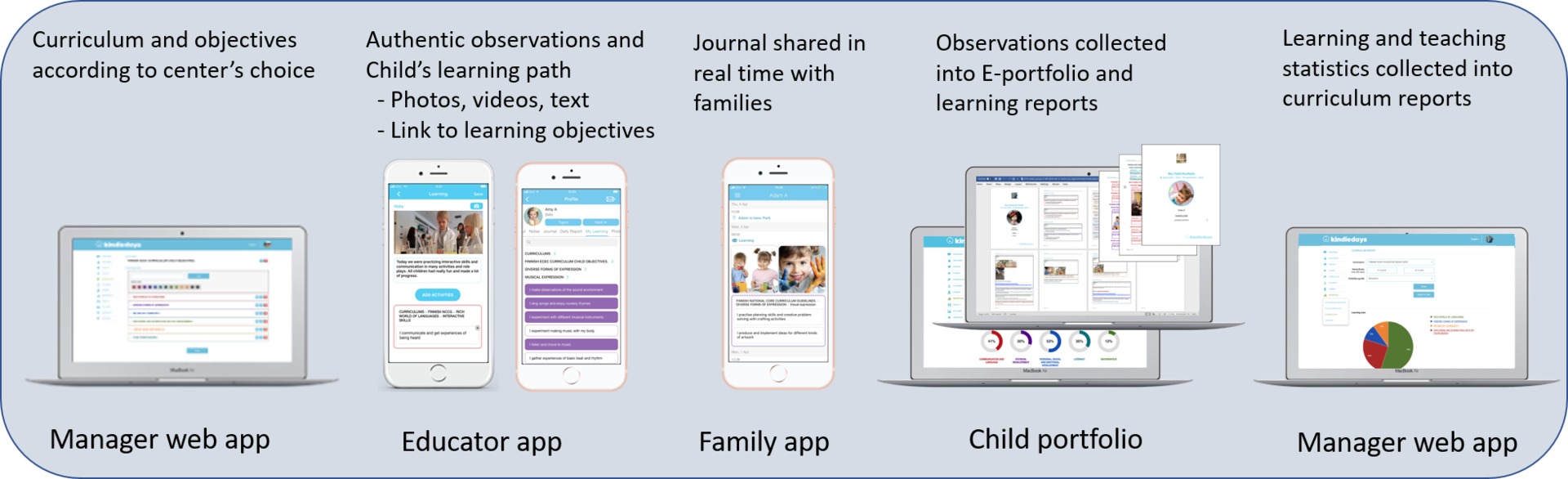
Overall you will need to rethink your work with the children. With smart working methods and an efficient digital solution, such as Kindiedays, you will have time for the children and also do Pedagogical Documentation to reach the goals above. In the Post section on our web page we have collected a lot of useful guidance for you to explore.


Contact us to learn how Kindiedays can take your center to a new level by saving time from tedious non-teaching activities and providing support for children's education. With Kindiedays Pedagogical Documentation solution you smoothly and efficiently track the children's learning progress and guarantee that every child gets to reach their personal best.


Beginner's guide to pedagogical documentation

Repost from blog by Suzanne Axelsson, Interaction Imagination https://www.interactionimagination.com/post/2019/03/10/a-beginners-guide-to-pedagogical-documentation

PEDAGOGICAL DOCUMENTATION HAS FOUR DISTINCT ROLES AND OBJECTIVES:


  • Makes children’s learning visible to the children.
  • Parents get to see the processes, not just the product of the time at the preschool.
  • The teachers learn more about how the children learn, which means they can adapt how they teach to how the children learn. 
  • Provides information about the children’s learning and progress, which might also be shared with authorities.

PEDAGOGICAL DOCUMENTATION CIRCLE


Pedagogical documentation differs from documenting in the sense that it is a tool to allow participation in the children's own learning... where documentation is collected, analysed, discussed, reflected on, used to plan, returned to, more collecting of data as needed etc... so that the educator is learning from the child, to become better at facilitating the children's learning.

Suzanne Axelsson is the person behind Interaction Imagination: "I have worked for over 20 years with children from age one until the age of 12... most of my years spent with 1-6 year olds. My interest for the early years encouraged me to deepen my understanding and lead to a masters in ECE. I have worked as a preschool teacher, director and consultant over the years - learning from each of these roles. I am also the mother of three children with autism who have taught me so much."

HOW TO GET STARTED WITH PEDAGOGICAL DOCUMENTATION?


Pedagogical Documentation is one of the cornerstones of Finnish Early Childhood Education. But of all the obstacles that educators face trying to to document children's work, simply finding the time and right working methods is perhaps most challenging. Just using manual working methods and tools is too cumbersome and leaves too little time to provide quality education.


Overall you will need to rethink your work with the children. With smart working methods and an efficient digital solution, such as Kindiedays, you will have time for the children and also do Pedagogical Documentation to reach the goals above. In the Post section on our web page we have collected a lot of useful guidance for you to explore.


Contact us to learn how Kindiedays can take your center to a new level by saving time from tedious non-teaching activities and providing support for children's education. With Kindiedays Pedagogical Documentation solution you smoothly and efficiently track the children's learning progress and guarantee that every child gets to reach their personal best.


Beginner's guide to pedagogical documentation

Repost from blog by Suzanne Axelsson, Interaction Imagination https://www.interactionimagination.com/post/2019/03/10/a-beginners-guide-to-pedagogical-documentation

PEDAGOGICAL DOCUMENTATION HAS FOUR DISTINCT ROLES AND OBJECTIVES:


  • Makes children’s learning visible to the children.
  • Parents get to see the processes, not just the product of the time at the preschool.
  • The teachers learn more about how the children learn, which means they can adapt how they teach to how the children learn. 
  • Provides information about the children’s learning and progress, which might also be shared with authorities.

PEDAGOGICAL DOCUMENTATION CIRCLE


Pedagogical documentation differs from documenting in the sense that it is a tool to allow participation in the children's own learning... where documentation is collected, analysed, discussed, reflected on, used to plan, returned to, more collecting of data as needed etc... so that the educator is learning from the child, to become better at facilitating the children's learning.

Suzanne Axelsson is the person behind Interaction Imagination: "I have worked for over 20 years with children from age one until the age of 12... most of my years spent with 1-6 year olds. My interest for the early years encouraged me to deepen my understanding and lead to a masters in ECE. I have worked as a preschool teacher, director and consultant over the years - learning from each of these roles. I am also the mother of three children with autism who have taught me so much."

HOW TO GET STARTED WITH PEDAGOGICAL DOCUMENTATION?


Pedagogical Documentation is one of the cornerstones of Finnish Early Childhood Education. But of all the obstacles that educators face trying to to document children's work, simply finding the time and right working methods is perhaps most challenging. Just using manual working methods and tools is too cumbersome and leaves too little time to provide quality education.


Overall you will need to rethink your work with the children. With smart working methods and an efficient digital solution, such as Kindiedays, you will have time for the children and also do Pedagogical Documentation to reach the goals above. In the Post section on our web page we have collected a lot of useful guidance for you to explore.


Contact us to learn how Kindiedays can take your center to a new level by saving time from tedious non-teaching activities and providing support for children's education. With Kindiedays Pedagogical Documentation solution you smoothly and efficiently track the children's learning progress and guarantee that every child gets to reach their personal best.